Tin

| |||||||||||||||||||||||||||||||||||||||||||||||||||||||||||||||||||||||||
| Appearance | |||||||||||||||||||||||||||||||||||||||||||||||||||||||||||||||||||||||||
|---|---|---|---|---|---|---|---|---|---|---|---|---|---|---|---|---|---|---|---|---|---|---|---|---|---|---|---|---|---|---|---|---|---|---|---|---|---|---|---|---|---|---|---|---|---|---|---|---|---|---|---|---|---|---|---|---|---|---|---|---|---|---|---|---|---|---|---|---|---|---|---|---|---|
Silver-white (left, β tin) or gray (right, α tin) | |||||||||||||||||||||||||||||||||||||||||||||||||||||||||||||||||||||||||
| General characteristic | |||||||||||||||||||||||||||||||||||||||||||||||||||||||||||||||||||||||||
| Name, Sign, Number | Tin, Sn, 50 | ||||||||||||||||||||||||||||||||||||||||||||||||||||||||||||||||||||||||
| Classification | Base metal | ||||||||||||||||||||||||||||||||||||||||||||||||||||||||||||||||||||||||
| Family, Period, Block | 14, 5, p | ||||||||||||||||||||||||||||||||||||||||||||||||||||||||||||||||||||||||
| Atomic weight | 118.710 | ||||||||||||||||||||||||||||||||||||||||||||||||||||||||||||||||||||||||
| Electron configuration | [Kr] 4d10 5s2 5p2 | ||||||||||||||||||||||||||||||||||||||||||||||||||||||||||||||||||||||||
| Electron shell | 2, 8, 18, 18, 4(Image) | ||||||||||||||||||||||||||||||||||||||||||||||||||||||||||||||||||||||||
| Physical characteristic | |||||||||||||||||||||||||||||||||||||||||||||||||||||||||||||||||||||||||
| Aspect | Solid | ||||||||||||||||||||||||||||||||||||||||||||||||||||||||||||||||||||||||
| Density (room temperature neighborhood) | (β tin) 7.365 g/cm3 | ||||||||||||||||||||||||||||||||||||||||||||||||||||||||||||||||||||||||
| Density (room temperature neighborhood) | (α tin) 5.769 g/cm3 | ||||||||||||||||||||||||||||||||||||||||||||||||||||||||||||||||||||||||
| Liquid density at the melting point | 6.99 g/cm3 | ||||||||||||||||||||||||||||||||||||||||||||||||||||||||||||||||||||||||
| Melting point | 505.08 K, 231.93 degrees Celsius, 449.47 degrees Fahrenheit | ||||||||||||||||||||||||||||||||||||||||||||||||||||||||||||||||||||||||
| The boiling point | 2875 K, 2,602 degrees Celsius, 4,716 degrees Fahrenheit | ||||||||||||||||||||||||||||||||||||||||||||||||||||||||||||||||||||||||
| Heat of fusion | (β tin) 7.03 kJ/mol | ||||||||||||||||||||||||||||||||||||||||||||||||||||||||||||||||||||||||
| The heat of evaporation | (β tin) 296.1 kJ/mol | ||||||||||||||||||||||||||||||||||||||||||||||||||||||||||||||||||||||||
| Thermal capacity | (25 degrees Celsius) (β tin) 27.112 J/(mol·K) | ||||||||||||||||||||||||||||||||||||||||||||||||||||||||||||||||||||||||
| Vapor pressure | |||||||||||||||||||||||||||||||||||||||||||||||||||||||||||||||||||||||||
| |||||||||||||||||||||||||||||||||||||||||||||||||||||||||||||||||||||||||
| Atom properties | |||||||||||||||||||||||||||||||||||||||||||||||||||||||||||||||||||||||||
| Oxidation state | 4, 2, -4(Amphoxide) | ||||||||||||||||||||||||||||||||||||||||||||||||||||||||||||||||||||||||
| Electronegativity | 1.96 (value of the polling) | ||||||||||||||||||||||||||||||||||||||||||||||||||||||||||||||||||||||||
| Ionization energy | The first: 708.6 kJ/mol | ||||||||||||||||||||||||||||||||||||||||||||||||||||||||||||||||||||||||
| The second: 1411.8 kJ/mol | |||||||||||||||||||||||||||||||||||||||||||||||||||||||||||||||||||||||||
| The third: 2943.0 kJ/mol | |||||||||||||||||||||||||||||||||||||||||||||||||||||||||||||||||||||||||
| Zirconium | 140 pm | ||||||||||||||||||||||||||||||||||||||||||||||||||||||||||||||||||||||||
| Covalent radius | 139+-4 pm | ||||||||||||||||||||||||||||||||||||||||||||||||||||||||||||||||||||||||
| van der Waals radius | 217 pm | ||||||||||||||||||||||||||||||||||||||||||||||||||||||||||||||||||||||||
| Others | |||||||||||||||||||||||||||||||||||||||||||||||||||||||||||||||||||||||||
| Magnetism | (β tin) Paramagnetism (α tin), diamagnetic [1] | ||||||||||||||||||||||||||||||||||||||||||||||||||||||||||||||||||||||||
| Electric specific resistance | (0 degrees Celsius) 115 nΩ·m | ||||||||||||||||||||||||||||||||||||||||||||||||||||||||||||||||||||||||
| Thermal conductivity | (300 K) 66.8 W/(m·K) | ||||||||||||||||||||||||||||||||||||||||||||||||||||||||||||||||||||||||
| Thermal expansion rate | (25 degrees Celsius) 22.0µm/(m·K) | ||||||||||||||||||||||||||||||||||||||||||||||||||||||||||||||||||||||||
| Young's modulus | 50 GPa | ||||||||||||||||||||||||||||||||||||||||||||||||||||||||||||||||||||||||
| Rigidity | 18 GPa | ||||||||||||||||||||||||||||||||||||||||||||||||||||||||||||||||||||||||
| Volume coefficient of elasticity | 58 GPa | ||||||||||||||||||||||||||||||||||||||||||||||||||||||||||||||||||||||||
| Poisson ratio | 0.36 | ||||||||||||||||||||||||||||||||||||||||||||||||||||||||||||||||||||||||
| Mohs scale | 1.5 | ||||||||||||||||||||||||||||||||||||||||||||||||||||||||||||||||||||||||
| The yellowtail flannel hardness | 51 MPa | ||||||||||||||||||||||||||||||||||||||||||||||||||||||||||||||||||||||||
| CAS registration number | 7440-31-5 | ||||||||||||||||||||||||||||||||||||||||||||||||||||||||||||||||||||||||
| The most stable isotope | |||||||||||||||||||||||||||||||||||||||||||||||||||||||||||||||||||||||||
| The details refer to an isotope of tin | |||||||||||||||||||||||||||||||||||||||||||||||||||||||||||||||||||||||||
| |||||||||||||||||||||||||||||||||||||||||||||||||||||||||||||||||||||||||


Tin (tin British: Tin German: Zinn) is metal classified in the carbon family element in the representative element and is an element of atomic number 50. The symbol of an element is Sn.
Table of contents
Summary
Tin is included in cassiterite. As the metal which refinement and the processing were easy to relatively make, I have been used for a long time. It is famous as materials such as the bronze ware.
Although the Sn of the symbol of an element of tin came from "stannum" of the Latin, essentially this word was an alloy of silver and lead. It came to call tin "stannum" from the about fourth century.
When bend metal tin, tin calls by crystal structure changing; called (tin cry) I hear a unique sound. Similar phenomenon is seen with niobium and indium.
Structure, properties of matter
The crystal structure by normal temperature, the ordinary pressure calls metal tin of this state β tin (white tin) with tetragonal β tin (beta-tin) structure.
β tin becomes α tin (gray tin, a bandgap semiconductor [source] of approximately 0.1 eV required) at low temperature (13 degrees Celsius or less) to γ tin (rhombus tin) at a high temperature (more than 161 degrees Celsius).
A superconduction transition point is 3.72K [2].
Same tendencies metamorphic
There is a transition point of β tin and α tin to the temperature that is almost normal temperature to tin. Malleability is lost for the metastasis to α tin, and volumes largely increase at the same time. Most of this metastasis does not advance under the influence of impurities in the normal temperature range, but metastasis may progress in the environment of the benumbing cold such as the polar region, and the phenomenon that grows tinware, and crumbles produces it. I compare it to an epidemic and am called tin pest that this phenomenon begins in the part of the tinware and spreads through the whole before long.
There is a thing showing the same tendencies metamorphosis that crystal structure turns into depending on such temperature and pressure to metal not only tin. The properties of matter greatly change by these same tendencies metamorphosis with tin. I metamorphose into α tin at 13.2 degrees Celsius from β tin physically, but it is really from the low temperature domain of -10 degrees Celsius that a reaction advances and the reaction velocity becomes greatest, but takes it at -45 degrees Celsius for approximately 500 hours though still 1mm advances. Tin has γ tin in 161 degrees Celsius or more by difference in crystal structure more; these different simple substances an allotrope and the temperature to call it, and to metamorphose into called the transition temperature [3].
Isotope
Tin relatively has many kinds of the stable isotope. When this is because it is 50, this is given an explanation that the number of protons of tin is one of the number of the magic about.
Compound
- Stannous chloride (SnCl2, SnCl4)
- Three of tin oxide - follows exist.
- Tin oxide (II) (SnO)
- Tin oxide (IV) (SnO2) - I have relatively high conductivity for metal oxide.
- Tin oxide (VI) (SnO3)
- Stannic sulfide (SnS, SnS2)
- Tin (SnF2,SnF4) fluoride
- Tin (SnBr2,SnBr4) bromide
- Tin (SnI2,SnI4) iodide
- Organotin compound(The present conditions of the internal secretion disturbance chemical substance # study Cf. も)
Use
Because tin had lower melting point than iron, as the metal materials which it was easy to relatively process, I have been used as an ingredient of a tin simple substance or the alloy as the metal materials which it was easy to relatively treat again than lead with a little harm widely from ancient times.
Alloy
For an alloy containing tin, the bronze which is a solder (there is the solder of the lead-free recently) which is an alloy with lead, an alloy with copper is representative. A cannon made of cast iron is this till then, and the gunmetal which is a kind of the bronze is cast from about 1450 to be full of toughness, and the name of the gunmetal comes from here, too. The cannon got stability by the conversion to a product made in this bronze, and the cannon became completely made of bronze in about 1520 [4]. It is iron, and the cannon shifted again before long, but the gunmetal is used in the bearings of the machine widely in the present age.
The pipe of the pipe organ is the alloy which is main with tin, too. In addition, tin is included in a type metal.
A pewter (solder) which was an alloy composed primarily of tin was used for high-quality tableware next to the silverware in Europe in the Middle Ages. In Malaysia producing tin in large quantities, tableware and a vase, other industrial art objects which I made with a pewter from the 19th century are made, and it is to a special product representing a country, and the products such as royal selane goal companies are exported to each country [5]. Soldiers of tin which is the toy for the boy made with tin are produced in Europe from to the first half from the 19th to the 20th century, and I am collected in the present age by a collector. I confer a pewter (tin alloy) medal on a player of the fourth place by the U.S. figure skating championship.
In addition, there are babbitt metal (alloy with copper and antimony), Wood's metal or a series of low melting point alloys such as the moth tongue to rinse used for a bearing.
Metal tin
Because there was moderate hardness and was easy to process it about the tin simple substance, I have been used as daily necessities and tin foil such as the tableware widely until aluminum was cheap, and it came to be produced. Cheap aluminum ware comes to be sold, and there was the time when demand fell, but in late years a hypothesis whether aluminum is one of the causes of Alzheimer's dementia has been shown, and the value as harmless metal materials is reviewed.
Plating
It was the tin plate which coated β tin to a steel sheet at first to have been developed as a use of modern times and similarly I opened the way to use of large quantities of the steel sheet which was easy to be rusted with tin which I coated and was used for a steel sheet as materials of canned food and the toy with zinc widely.
Other
I am used as an electrode of a liquid crystal display, the organic electroluminescence, and oxide (ITO) of indium and tin is used for the surfaces such as the windshields of the car as heat rays cut glass.
In addition, I am used for production of the float glass using a melting point being low.
The organotin compound is used for stabilizers such as vinyl chloride widely [6].
Use in Japan
I was more likely to be brought into Japan with tea for an artefact of the tin itself late in the Nara era. It is supposed to be a tea caddy, a saucer for a teacup saying in now. Because metal tin was relatively less toxic and was strong in the oxidation and corrosion, it was useful as eating and drinking caliber mainly. An instrument of tin is often used even now on the green tea of medium quality way descending from the continent cafe culture. Japan's original thing has God tool such as a broad-shouldered liquor bottle (I let you be a constantly-seen-together couple), a waterdrop, the high cup used in a Shinto shrine. The manufacturing method developed all around Kyoto and spread out to the whole country. It was got used to townsman rank in the Edo era, and I was praised to the skies as as a note caliber in bottle and cups in particular by the thing of the previous privileged class. A traditional tin industrial art object is still left to Kyoto, Osaka (Osaka wave sinter tin device), Kagoshima (Satsuma tin device) [7]. In late years a beer mug or the tumbler came to be made other than sake use, too. In addition, there is a place using ちろりを made of expensive tin as feelings for warming of the sake in some relatively high-quality restaurants. It is not sure, but the tinware purifies water, and added flavor in the course of the brewing is removed, and it is said that liquor becomes mellow scientifically. In late years tinware and a work using a soft property of tin are made around Toyama.
Consumption according to the use
The most important use is production of the solders and occupies approximately 45% of tin annual usages among the uses mentioned above. Then, approximately 20% are used for tin plating (tin plate). The third use is use as the compounds to use for stabilizers such as vinyl chloride, and approximately 15% are used in this use. A lot of 20% of remainder is things to be used in an alloy and vitrifacture, other uses including the tin industrial art object [8].
- Example of the use
-
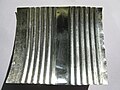
Steel sheet of the canned food which plated tin
-
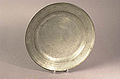
Plate of the pewter
-

Solder
Toxic
Tin is not absorbed in a human being and an animal easily, and the biological role in the living body is not known. Because tin is less toxic in metal and oxide, the form of the inorganic compound such as salts, tableware or canned food are used over a wide area [9], but the acute intoxication by taking in the food which tin eluted in high density by corrosion of the canned food inside occurs [10]. Nausea, vomiting, diarrhea are seen as a symptom of the acute toxicity [10]. For example, it is established to do it if the density of tin is less than 150ppm in the Japanese food hygiene law [10] and does the upper limit of canned food food tin density with 200ppm at the U.K. food standard station [11]. In the investigation that a British food standard station performed in 2002, 99.5% are less than an upper limit level of the content of tin among canned food of the surveyed food, and sale suspension measures have it stolen about the canned food which exceeded the standard value [12]. Because there is not the report of the case of the acute intoxication of tin in the report of Blunden of 2003 in the past 25 years in the density of 200ppm range from 100, an opinion that it is suggested that the threshold of the acute intoxication of tin is 200ppm is shown [13]. In addition, the lungs may be attacked for a long term in the environment exposed to mine dust of tin oxide and are called a tin lungs symptom. In the case of the digging from the mine, many workers suffered from disease of the lungs in the times when the environment was not regulated well.
On the other hand, it is much higher in the toxicity of the organotin compound than the toxicity of the inorganic tin compound, and, as for the toxicity, as for some organotin compounds of the thing varying according to organic group, there is the thing having the very strong toxicity at the same level as cyanide [9]. Trybutyle tin derivative (TBT) was used as the paint which prevented that a shellfish attached to the bottom of a ship effectively widely, but the toxicity of TBT including the accumulation toxicity for action and the sea life as the internal secretion disturbance chemical substance began to be known after the 1970s and came to be regulated including having prohibited that the French Government used paint including TBT for a small craft in 1982 in each country [14]. For example, bis(trybutyle tin) oxide is targeted for regulation as a specified chemical substance of the first kind by a law (化審法) about regulation such as the examination of the chemical substance and the production in Japan [15], and a triphenyl tin derivative and the trybutyle tin derivative are targeted for regulation as a specified chemical substance of the second kind, too [16]. The international treaty (IMO treaty) about the rule of the harmful impurity method of the ship which prohibited use of the paint containing the organotin compound on all ships in 2001-proof was adopted by the International Maritime Organization and took effect by 25 countries having ratified it in 2008 [17]. In addition, TBT is added to attachment book III that is a list of materials targeted for the regulation of the Rotterdam treaty (Rotterdam treaty about the procedure of the agreement based on before the thing about a specific harmful chemical substance targeted for the international trade and the exterminator and the information, PIC treaty) in 2009 and is required to have to perform export application except non-intentional mixture less than 500ppm to perform international trade of TBT [18].
It calls and tin
When I add power to a crystal of white tin which is a body center tetragon lattice and transform it, I start "a crunch" and a sound, and a metal crystal does plastic deformation, and inside crystal changes into a twin crystal. This twin crystal is called a heteromorphic twin crystal and a mechanical twin crystal and is distinguished from the annealing twin crystal which is made when I bake it after cold-work and cool it down and was done [3].

Tin ore
Important mineral ore of tin is cassiterite (SnO2) and occupies three-fourths of the tin ore [19]. I produce it as ore formation with the quartz mainly. I can collect tantalum from slag. Because the cassiterite is based on big tin of the specific gravity and small quartz of the specific gravity and is not familiar with floating ore dressing again, the gravity concentration method that is the old ore dressing method (I pour water on the table which appeared of the ore and I let you vibrate and separate by a difference of the specific gravity) is used mainly [20]. Because I am strong in weathering, I produce it as stream tin of the alluvial deposit. In addition, the stannite (Cu2FeSnS4) which sulfurated is one of the main ores [21].
Production
 Indonesia Indonesia | 117500 |
 China China | 114300 |
 Peru Peru | 38470 |
 Bolivia Bolivia | 17669 |
 Brazil Brazil | 9528 |
 The Democratic Republic of Congo The Democratic Republic of Congo | 7200 |
 Russia Russia | 5000 |
 Vietnam Vietnam | 3500 |
 Malaysia Malaysia | 2398 |
| World meter | 321000 |
| Year | 1 million tons |
|---|---|
| 1965 | 4,265 |
| 1970 | 3,930 |
| 1975 | 9,060 |
| 1980 | 9,100 |
| 1985 | 3,060 |
| 1990 | 7,100 |
| 2000 | 7,100[24] |
| 2010 | 5,200[25] |
| Country | Reserves |
|---|---|
| China | 1,500,000 |
| Malaysia | 250,000 |
| Peru | 310,000 |
| Indonesia | 800,000 |
| Brazil | 590,000 |
| Bolivia | 400,000 |
| Russia | 350,000 |
 Australia Australia | 180,000 |
 Thailand Thailand | 170,000 |
| Other countries | 180,000 |
| The sum total | 4,800,000 |
| Company name | Country | 2006 | 2007 | %The increase and decrease |
|---|---|---|---|---|
| Yunnan tin business | China | 52,339 | 61,129 | 16.7 |
| Chima company | Indonesia | 44,689 | 58,325 | 30.5 |
| Minsur | Peru | 40,977 | 35,940 | −12.3 |
| Malay | China | 52,339 | 61,129 | 16.7 |
| Malaysia Smelting Corp | Malaysia | 22,850 | 25,471 | 11.5 |
| Thaisarco | Thailand | 27,828 | 19,826 | −28.8 |
| 雲南乗風 | China | 21,765 | 18,000 | −17.8 |
| Liuzhou China Tin | China | 13,499 | 13,193 | −2.3 |
| EM Vinto | Bolivia | 11,804 | 9,448 | −20.0 |
| Gold Bell Group | China | 4,696 | 8,000 | 70.9 |
| Country | Mine amount of production | Refinement place amount of production |
|---|---|---|
| Indonesia | 117,500 | 80,933 |
| China | 114,300 | 129,400 |
| Peru | 38,470 | 40,495 |
| Bolivia | 17,669 | 13,500 |
| Thailand | 225 | 27,540 |
| Malaysia | 2,398 | 23,000 |
| Belgium | 0 | 8,000 |
| Russia | 5,000 | 5,500 |
| The Democratic Republic of Congo | 15,000 | 0 |
The deposit of tin is classified roughly into a drift sand deposit and a vein, and a vein is mainstream in the South American Andes a drift sand deposit in Southeast Asia. The world amount of production from the mine of 2006 is 321,000 tons. The country with much production of tin is Indonesia and rises to 117,500 tons most in 2006. It is China to be next to this and produces 114,300 tons. There is much less amount of production than higher two countries, and the production of the country except this is half as follows with 38,470 tons in Peru of the third place. The production continues as follows with Bolivia, Brazil, Democratic Republic of Congo, Russia, Vietnam, Malaysia. The greatest producer of tin became China after this in 2010, and, in Indonesia, a tin ore, tin pure ore became the amount of production of the second place of the world together [29]. Tin is one of the metal than reserves with many consumptions, and 可採埋蔵量 is only 18 years (2007), but tin is many minerals of non-exploration area, and it is thought that the real drying up becomes after it than it because the estimate reserve is anticipated [30]. In addition, as for tin, recycling is prosperous, and supply from recycling exists approximately 14,000 tons other than 320,000 tons of production from the mine [31]. The tin ore is not necessarily refined in a country of origin, and the country which is not performed of the refinement exists at all in the country while producing a large quantity of tin ores in a country and the reverse that there is much refinement quantity like the Democratic Republic of Congo though I do not produce tin at all in the country like Belgium. スズ生産企業としては、中国の雲南錫業やインドネシアの国営スズ鉱山企業であるティマ社などが大きい。
日本においてはかつて兵庫県の明延鉱山などで盛んに産出されたが、現在ではスズ鉱山のほとんどは閉山し産出はわずかである。2008年には日本のスズ輸入量は33659トンであったが、このほかに日本国内に流通するブリキやハンダの多くはリサイクルに回されるため、この回収された分の国内生産量が879トン存在する[32]。
歴史
スズは融点が低く、また主要鉱石である錫石からの精練が容易であるため、人類史においてもっとも早くから使用され始めた金属の1つである。当初の主な用途は銅との合金である青銅を製造することであり、紀元前3000年ごろにメソポタミアにおいてはじめて青銅が開発されたことによって銅の硬度不足が大幅に改善され、人類は石器時代から青銅器時代へと移行した。ただしスズは地域的に非常に偏在している鉱物[33]であり、現代においても一部地域に鉱山が集中する傾向がある。このため、スズを発見できなかった地域においては石器時代が長く続くことも稀ではなかった。日本においては青銅の製法は鉄と同時に伝えられたために青銅器時代が存在せず、また新大陸においても青銅の発見が遅れたために、スペイン人が新大陸に到達した時点において青銅は装飾品としての利用に限られていた。
古くから世界有数(少なくともヨーロッパ最大)のスズの産地だったのは、イギリスのコーンウォールである。この地域のスズ鉱山はフェニキア人が初めて開発し、各地に盛んにスズを輸出していた。コーンウォールに隣接するデヴォン州においては、スズのインゴットを積んだ青銅器時代の難破船が発見されており[34]、この時期すでに盛んにスズ交易がおこなわれていたことをうかがわせる。この航路を握っていたフェニキア人国家であるカルタゴの崩壊後はローマ人がこの交易を握り、やがて43年のクラウディウス帝の遠征によってコーンウォールはローマ帝国領のブリタンニアとなり、帝国崩壊後も中世・近世にかけて、イギリスはヨーロッパ中にスズを輸出していた。しかし産業革命により、とくに1810年にイギリスのピーター・デュラントによって缶詰が開発されブリキ製造用のスズの需要が急増すると、コーンウォールのスズでは不足するようになり、産出量も1871年を最後に減少するようになった[35]。それ以降も1890年代までは世界有数の産地であり続けたが、他産地との競合に敗れて1900年代にはシェアが大幅に下落した[36]。
それに代わって世界最大のスズ産出国となったのがマレーシアである。マレー半島は古くからスズの産地として知られていたが、イギリスの植民地時代に資源開発が進み、1972年の7700トン/年をピークに減少に転じたものの、1985年までは世界の約1/4のシェアを占めていた。マレーにおけるスズの主産地はキンタ渓谷からクラン渓谷にかけての一帯であり[37]、この錫鉱山地帯の中心となったイポーは1900年代に入り急速に発展した。この時期、スズが国家経済において重要な地位を占めたもう1つの国はボリビアである。ボリビアのスズ開発は1880年代にはじまり、当時同国の主要輸出品であった銀の退潮と時を同じくして生産は急増していった。このスズの増産は民族資本によって行われたものであり、オルロ近郊にあるワヌニ鉱山の開発によって世界有数の大富豪と呼ばれたシモン・パティーニョのパティーニョ財閥をはじめとし、カルロス・ビクトル・アラマヨのアラマヨ財閥とマウリシオ・ホッホチルドのホッホチルド財閥を含めた3大財閥が生産の大部分を独占していた。これらの新興財閥はラパス市に本拠を置く自由党と結びつき[38]、1899年には銀鉱山主と結びつきスクレ市を基盤とする保守党の政権を打倒した。これはボリビア連邦革命と呼ばれ、これによってボリビアの首都はスクレからスズ鉱山主の本拠地であるラパス市に事実上移動した。その後はさらにボリビアのスズ生産は増加し、1902年には銀の輸出額を抜き、1913年には同国の輸出の70%を占めるようになり[39]、「スズの世紀」とも呼ばれる時期を現出した。この好況期は1929年の大恐慌によって終息するが、その後も1980年代にいたるまでの100年以上もの間、スズはボリビア経済の柱となっていた。
こうしたスズ生産を統括するため、1956年には国際スズ協定が採択された。この協定は価格維持と生産安定を主眼においたもので、下部機関の国際スズ理事会によって輸出割り当てや需給調整が行われていた。このシステムは1976年ごろまでは有効に機能したが、しかしその後はオイルショックによる資源全般高に引っ張られたスズの価格高騰と、それに反比例する消費の低迷によってこの協定は揺らぎ始めた。また、この協定は生産国と消費国がともに加盟するものであったため、生産国のための機関として1983年、スズ生産国同盟がマレーシアを中心として結成された。さらに1982年に第6次協定が締結されたが、これには大生産国のボリビアやアメリカ、ソビエト連邦の3か国が参加しなかったため、市場支配力が80%から53%にまで激減したことも、この体制の動揺を加速させた。そして1985年、国際スズ市場が暴落したため国際スズ理事会が機能を停止し、それを受けてロンドン金属取引所(LME)でのスズが取引停止となり、世界中のスズ取引が停止してしまった。錫危機である[40]。これによって国際スズ協定の価格維持策は完全に崩壊した。
このためにマレーシアのスズ鉱業は壊滅的な打撃を受け、翌1986年には産出量は半減し、その後も市場の混乱や資源枯渇による衰退が続き、現在は主要でない産出国の1つにすぎない。またボリビアも、1952年のボリビア革命によって3大財閥のスズ鉱山が接収されて国有化されたのちは、非効率な経営によって生産の減退が続き、1986年に国有企業のボリビア鉱山公社が解散した後でも生産の伸びは見られず、生産量は世界第4位にまで落ち込んでいる。
これにかわってスズ生産を伸ばし大生産国に躍り出たのは、インドネシアと中国だった。インドネシアは19世紀末のオランダ領インドネシア時代にバンカ島とブリトゥン島(ビリトン島)でのスズ開発が始まって以来のスズの生産国のひとつである。このうちビリトン島で1860年にスズの採掘を始めたビリトン社は、やがてオランダ領スリナムのボーキサイト採掘など非鉄金属鉱山全般に業務を拡大し、やがて2001年にオーストラリアのBHP社と合併して世界最大の資源企業であるBHPビリトンとなった。この両島でのスズ採掘は現代ではインドネシア国営企業のティマ社が行っている[41]。
スズの価格は上記のスズ危機以降低迷を続け、2002年ごろまで低迷していたが、その後中国のスズ需要の急増などに伴って価格が急騰し、2007年には2002年の3倍以上の価格となった[42]。
脚注
- ^ Magnetic susceptibility of the elements and inorganic compounds, in Handbook of Chemistry and Physics 81st edition, CRC press.
- ^ Dehaas, W; Deboer, J; Vandenberg, G (1935). "The electrical resistance of cadmium, thallium and tin at low temperatures". Physica 2: 453. Bibcode 1935Phy.....2..453D. doi:10.1016/S0031-8914(35)90114-8.
- ^ a b 大澤, 直 『金属のおはなし』 日本規格協会(原著2006年1月25日)、第1版第1刷。ISBN 4542902757。
- ^ 学研 「歴史群像グラフィック戦史シリーズ 戦略戦術兵器事典3 ヨーロッパ近代編」p80 1995年10月1日第1刷
- ^ http://www.tourismmalaysia.or.jp/mstyle/backnumber/backnumber-0710/omoshiro.html 「ピューターが紐解く発展の歴史」『Malaysia web magazine「m-style」』(マレーシア政府観光局)内 2015年10月24日閲覧
- ^ http://www.teta.jp/t-organictin.htm 「有機スズ化合物について」スズ化合物環境技術協議会 2015年10月24日閲覧
- ^ http://www.city.kagoshima.lg.jp/keizai/keizaishinko/san-shien/sangyo/shokogyo/jibasangyo/tokusanhin.html 「鹿児島の特産品」鹿児島市ホームページ 2015年10月24日閲覧
- ^ 「レアメタル・資源 38元素の統計と展望」p159-160 西山孝 丸善 平成21年11月30日発行
- ^ a b G. G. Graf "Tin, Tin Alloys, and Tin Compounds" in Ullmann's Encyclopedia of Industrial Chemistry, 2005 Wiley-VCH, Weinheim doi:10.1002/14356007.a27_049
- ^ a b c "HACCP関連情報データベース 1.4.スズ". 社団法人 食品産業センター. 2012年10月18日閲覧。
- ^ "Eat well, be well — Tin". Food Standards Agency. 2012年10月18日閲覧。
- ^ "Tin in canned fruit and vegetables (Number 29/02) (PDF)". Food Standards Agency (2002年8月22日). 2009年4月16日閲覧。
- ^ Blunden, Steve; Wallace, Tony (2003). "Tin in canned food: a review and understanding of occurrence and effect". Food and Chemical Toxicology 41 (12): 1651–1662. doi:10.1016/S0278-6915(03)00217-5. PMID 14563390.
- ^ "有機スズ化合物の生物毒性". 化学と生物 Vol.32 (No.6). (1994) 2012年10月22日閲覧。.
- ^ "第一種特定化学物質". 環境省. 2012年10月18日閲覧。
- ^ "第二種特定化学物質". 環境省. 2012年10月18日閲覧。
- ^ "食品安全委員会ファクトシート 有機スズ化合物(概要)". 2012年10月22日閲覧。
- ^ "有機スズ化合物に関する環境動向". スズ化合物環境技術協議会. 2012年10月22日閲覧。
- ^ 西川精一 『新版金属工学入門』p427 アグネ技術センター、2001年
- ^ 「鉱物資源論」p61 志賀美英 九州大学出版会 2003年3月15日初版発行
- ^ 「レアメタル・資源 38元素の統計と展望」p159 西山孝 丸善 平成21年11月30日発行
- ^ [1]
- ^ "Tin: From Ore to Ingot". International Tin Research Institute (1991年). 2009年3月22日時点のオリジナルよりアーカイブ。2009年3月21日閲覧。
- ^ Carlin, Jr., James F.. "Tin: Statistics and Information (PDF)". United States Geological Survey. 2008年11月23日閲覧。
- ^ Carlin, Jr., James F.. "Tin: Statistics and Information (PDF)". United States Geological Survey. 2008年11月23日閲覧。
- ^ Carlin, Jr., James F.. "Tin: Statistics and Information (PDF)". United States Geological Survey. 2008年11月23日閲覧。
- ^ "International Tin Research Institute. Top Ten Tin Producing Companies.". 2008年12月7日時点のオリジナルよりアーカイブ。2009年5月5日閲覧。
- ^ World Mineral Production 2002–06. British Geological Survey. p. 89 2009年7月7日閲覧。.
- ^ 村井吉敬・佐伯奈津子・間瀬朋子著『エリア・スタディーズ113 現代インドネシアを知るための60章』 明石書店 2013年 308ページ
- ^ 「レアメタル・資源 38元素の統計と展望」p159 西山孝 丸善 平成21年11月30日発行
- ^ 「レアメタル・資源 38元素の統計と展望」p159 西山孝 丸善 平成21年11月30日発行
- ^ http://www.dowa-ecoj.jp/catalog/2011/20110901.html DOWAエコジャーナル2011年9月1日「スズ含有廃棄物のリサイクル事業」 2015年10月24日閲覧
- ^ 西川精一 『新版金属工学入門』p427 アグネ技術センター、2001年
- ^ 「海を渡った人類の遙かな歴史 名もなき古代の海洋民はいかに航海したのか」p243 ブライアン・フェイガン著 東郷えりか訳 河出書房新社 2013年5月30日初版
- ^ http://koara.lib.keio.ac.jp/xoonips/modules/xoonips/download.php/AN00234698-20130800-0001.pdf?file_id=98786 「第1次大戦直後のコーンウォール錫鉱山業-衰退産業と地域そして中央政府(1)」p3 工藤教和 慶応大学出版会 三田商学研究第56巻第3号 2013年8月 2015年7月1日閲覧
- ^ http://koara.lib.keio.ac.jp/xoonips/modules/xoonips/download.php/AN00234698-20130800-0001.pdf?file_id=98786 「第1次大戦直後のコーンウォール錫鉱山業-衰退産業と地域そして中央政府(1)」p4 工藤教和 慶応大学出版会 三田商学研究第56巻第3号 2013年8月 2015年7月1日閲覧
- ^ http://www.clair.or.jp/j/forum/forum/articles/jititai/133/INDEX.HTM 「自治体国際化フォーラム-イポー特別市」 一般財団法人自治体国際化協会 2015年7月1日閲覧
- ^ 眞鍋周三編著 『ボリビアを知るための73章 【第2版】 』p264 明石書店 <エリア・スタディーズ 54> 2013年 ISBN 978-4-7503-3763-0
- ^ 眞鍋周三編著 『ボリビアを知るための73章 【第2版】 』p264 明石書店 <エリア・スタディーズ 54> 2013年 ISBN 978-4-7503-3763-0
- ^ 「鉱物資源論」p165 志賀美英 九州大学出版会 2003年3月15日初版発行
- ^ 村井吉敬・佐伯奈津子・間瀬朋子著『エリア・スタディーズ113 現代インドネシアを知るための60章』 明石書店 2013年 306ページ
- ^ 「レアメタル・資源 38元素の統計と展望」p160 西山孝 丸善 平成21年11月30日発行
関連項目

外部リンク
This article is taken from the Japanese Wikipedia Tin
This article is distributed by cc-by-sa or GFDL license in accordance with the provisions of Wikipedia.
In addition, Tranpedia is simply not responsible for any show is only by translating the writings of foreign licenses that are compatible with CC-BY-SA license information.
0 개의 댓글:
댓글 쓰기