Eshima Shrine
| Eshima Shrine | |
|---|---|
 瑞心門 | |
| The location | KanagawaFujisawa-shiEnoshima2-3-8 |
| Position | 35°18'02" N A 139°28'47" E coordinate: 35°18'02" N 139°28'47" E |
| The main enshrined deity | 多紀理比賣命 市寸島比賣命 田寸津比賣命 |
| Shrine ranking | Prefectural shrine, separate table Shinto shrine |
| The foundation | (biography) Emperor Kinmei 13 years (552 years) |
| Style of the main shrine | Toshogu Shrine style (side Tsunomiya, Nakatsu shrine), 入母屋造 (Okutsu shrine) |
| Label places | The Kamakura Enoshima Seven Deities of Good Luck (Sarasvati) |
| Annual festival | Day of 巳 first in April |
| Map | 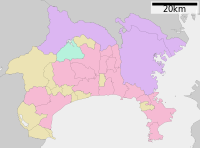  Eshima Shrine |
Eshima Shinto shrine (えのしまじんじゃ) is a Shinto shrine in Enoshima, Fujisawa-shi, Kanagawa. The old shrine ranking is a separate table Shinto shrine of the Shinto shrine central government office now in a prefectural shrine. It is counted in one of the Japan's three biggest wife of chief zen-priest [1].
Table of contents
Enshrined deity

I worship Munakata third daughter God. I enshrine 田寸津比賣命 in 市寸島比賣命, northern "side Tsunomiya" (へつみや) each in 多紀理比賣命, "Tsunomiya" (Katsumi) of the center in the western "Okutsu shrine" (おくつみや) of the island and name it generally with "Eshima Oga".
I worshiped Sarasvati until the Edo era and was called Eshima wife of chief zen-priest, Eshima Myojin.
In the case of gods and Buddha separation of the Meiji, the current enshrined deity was changed. Eight elbow Benzaiten Temple and dulcet tone Benzaiten Temple are enshrined in the Shrine of the side Tsunomiya precincts.
History

According to the company biography, I tell when it begins though I built a shrine into the south cave of Enoshima by an Imperial command of the Emperor Kinmei based on (552 years), Sen God for Emperor Kinmei 13 years. We became the temple on the pretence of 金亀山与願寺 by mixture of Buddhism and Shintoism. When 文覚 did Sarasvati Kanjiyo by (1182), a life of Yoritomo Minamoto in Iwaya of the island in the Juei era first year, according to "Agatsuma mirror," there is it and may do it with the foundation with this. I received veneration from successive General of Kamakura Shogunate, regents and a successive feudal lord. Goddess of fortune faith became popular in the Edo era, and many common people came to visit it [2].
We had three batmans of Iwamoto Bo, upper ノ Bo, lower ノ Bo and managed Iwaya Hongu (current Okutsu shrine), Uenomiya (Tsunomiya out of one of the present), Shimonomiya (current side Tsunomiya) each. Iwamoto Bo was considered to be a total batman in that and called myself the Eshima temple. The use of the another name of the nobleman who erected a temple was accepted, and only Iwamoto Bo came to call itself "a rock senior Pope" after having become the subordinate temple of Kyoto, Ninna-ji Temple in (1649) for go-between two years. Sanbo preached our omen competitively and gathered the circumference, people of prayer. A fight for right happened soon and (1640), the Iwamoto House got a red-seal letter from the Shogunate for Kanei era 17 years and absorbed upper ノ Bo. I come to rule over lower ノ Bo later, and ex-Emperor Iwamoto will hold the rights and interests of all of the islands.
Many Buddhism facilities or Buddha statues were destroyed other than a triple tower in 1868 by 廃仏毀釈 of (1868). I abolished Buddhist ceremony in (1872) in 1873 and became the Shinto shrine and was raised to the changing of a name, the prefectural shrine to "Eshima Shrine". Because all the priests left the priesthood at the same time and became a Shinto priest, and the Iwamoto House was used as the accommodations of the person of prayer, it was in an inn and renamed it to "an Iwamoto tower".
Precincts


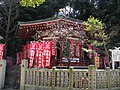

- Okutsu shrine: Former Hongu. I enshrine 多紀理比賣命. The main shrine of 入母屋造 was rebuilt in 1842 for Tenpo era 13 years. "The tortoise of the all-direction gaze" of Hoitsu Sakai is drawn on the front shrine ceiling, and there is Ishidorii where Yoritomo Minamoto dedicated it to.
- Middle Tsunomiya: Old Uenomiya. I enshrine 市寸島比賣命. I found it (853 years) for Ninju era three years. The main shrine of the Toshogu Shrine style was rebuilt in (1689) for Genroku era two years.
- Side Tsunomiya: Former Shimonomiya. I enshrine 田寸津比賣命. Sanetomo Minamotono founds it (1206) in the Kenei first year. The main shrine of the Toshogu Shrine style was rebuilt in (1675) for Enpo era three years.
- A Shrine: Eight elbow Benzaiten Temple and dulcet tone Benzaiten Temple are enshrined.
- Precincts company
- Yasaka-jinja Shrine: I enshrine Yukio Susa life. I called myself Four Devas company in the Edo era. The main shrine of 入母屋造 was rebuilt in (1844) in the Koka era first year.
- Palace of the Dragon King: I worship Palace of the Dragon King Ogami.
- Inari Shrine, Akiha Shrine: The company which enshrined the small shrine which was in Enoshima together.
- 瑞心門: The tower gate of the Dragon's Palace-style tower gate that the shrine gate imitated the Dragon's Palace.
- A copper torii: A torii of the bronze in the entrance of the precincts. A powerful old turtle with seaweed growing on its back is chopped with aging by the retainer of the pillar which became blue. It is located near Enoshima entrance.
Cultural assets
- A wooden coloring eight elbow Sarasvati sedentary image: Prefecture designation (sculpture)
- Hizen country Masahiro Fujiwara product sword: Prefecture designation (industrial art object)
- The tortoise of the all-direction gaze: City designation (picture)
- Eshima omen: City designation (book trace)
- A bronze torii: City designated cultural assets (building)
Sacred rites, annual function
- A first day of the Serpent days of the year festival: Annual festival. A day of 巳 first in April.
- 初亥祭: Annual festival to equal a festival in the first day of the Serpent days of the year. A day of 亥 first in October.
- Yasaka-jinja Shrine annual festival: Sunday when it is almost July 14. 海中渡御 of the miniature shrine is performed.
- Akiha Shrine annual festival: January 16. Fire prevention Rogation Days.
- Palace of the Dragon King annual festival: September 9.
The location, traffic
2-3-8, Enoshima, Fujisawa-shi, Kanagawa
- The nearest station: Odakyu Enoshima LineKatase-Enoshima Station、Enoshima Electric RailwayEnoshima StationAbout 15-minute walk from から. I can access it from Shonan-Enoshima Station of Shonan Monorail Enoshima Line.
Footnote
- ^ Chikubushima (都久夫須麻神社), Miyajima (Itsukushima Shrine), Enoshima (Eshima Shrine) are said to be the Japan's three biggest wife of chief zen-priest, but may put Tianhe fluency of speech fortune shrine dedicated to the heavenly gods of Yoshino in substitution for Eshima Shrine.
- For the common people of ^ Edo, it was one of the entertainment with a set of Daisen visiting a shrine and the Enoshima visiting a shrine.
Allied item

- Wife of chief zen-priest boy (in connection with one of the white-crested waves five men, Eshima protective goddess)
- Eshima three folds tower (destroyed by gods and Buddha separation of the Meiji)
- List of Shinto shrines
Outside link

- Eshima Shrine (official site)
- Did a triple tower soar once in Enoshima? - はまれぽ .com

This article is taken from the Japanese Wikipedia Eshima Shrine
This article is distributed by cc-by-sa or GFDL license in accordance with the provisions of Wikipedia.
In addition, Tranpedia is simply not responsible for any show is only by translating the writings of foreign licenses that are compatible with CC-BY-SA license information.
0 개의 댓글:
댓글 쓰기